You want your emails to stand out in a crowded inbox. But sending the same message to everyone rarely works.
That’s where segmentation comes in. By dividing your audience into smaller, targeted groups, you can send emails that truly speak to their needs and interests. Imagine the boost in open rates, clicks, and sales when your messages feel personal and relevant.
Curious how segmentation can transform your email marketing? Keep reading to discover why it’s one of the smartest moves you can make.
Benefits Of Email Segmentation
Email segmentationhelps send messages that fit each group’s needs. This leads to higher engagement ratesbecause people get emails they care about. They open and click more often.
Improved deliverabilityhappens since email providers see less spam. Sending targeted emails lowers bounce rates and keeps your list healthy. Your messages reach inboxes, not spam folders.
A personalized customer experiencemakes readers feel special. Emails can match their interests, location, or past buying habits. This builds trust and encourages more interaction with your brand.

Credit: martech.org
Types Of Segmentation Strategies
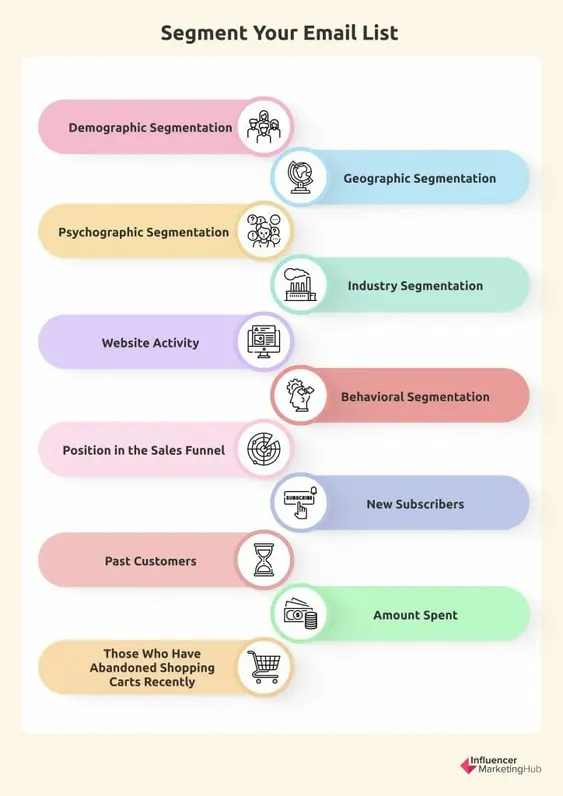
Demographic segmentationdivides people by age, gender, income, or education. This helps send emails that fit their life stage or needs.
Behavioral segmentationlooks at how people act. For example, it tracks what they buy or click on. This way, emails can match their interests and habits.
Geographic segmentationsorts people by location. It can be by country, city, or climate. Emails can then include local news or offers.
Psychographic segmentationfocuses on values, hobbies, or lifestyle. This type helps send emails that connect with their feelings and ideas.
Impact On Roi
Segmentationhelps send the right message to the right people. This leads to increased conversion ratesbecause emails feel personal and useful. People are more likely to buy or act.
It also lowers unsubscribe rates. When emails match interests, readers stay on the list longer. They feel respected and not spammed.
Customer retentionimproves too. Segmented emails build trust and keep customers coming back. Happy customers become loyal fans.

Credit: martech.org
Tools For Effective Segmentation
Email marketing platformshelp organize contacts into groups. They allow easy creation of segments based on interests, location, or behavior. These platforms often come with tools to send targeted emails quickly.
CRM integrationconnects email tools with customer data. This link helps marketers see past purchases and preferences. Using this info, emails become more personal and useful for each person.
Data analyticsshows which emails work best. It tracks opens, clicks, and sales. Marketers use these numbers to improve future campaigns and choose the right audience.
Best Practices For Segmentation
Regular list cleaningkeeps your email list fresh and active. It removes inactive or invalid emails. This improves delivery rates and reduces bounce backs. Clean lists help maintain a good sender reputation.
Testing and optimizationare key to better results. Try different subject lines, send times, or content. Measure which versions get more opens and clicks. Keep improving based on real data for best impact.
Dynamic content usepersonalizes emails for each subscriber. It changes parts of the message based on user data. This makes emails more relevant and interesting. Personalized emails get higher engagement and clicks.
Credit: influencermarketinghub.com
Frequently Asked Questions
What Is Email Segmentation In Marketing?
Email segmentation is dividing your email list into smaller groups. Each group shares specific traits like interests or demographics. This helps send targeted, relevant emails that improve engagement and conversion rates.
How Does Segmentation Improve Email Open Rates?
Segmentation delivers personalized content to subscribers. Personalized emails resonate better, increasing the chance recipients open them. This leads to higher open rates and better overall campaign performance.
Why Is Segmentation Important For Customer Engagement?
Segmentation ensures emails match subscriber preferences. Relevant emails encourage interaction and build stronger relationships. Engaged customers are more likely to respond, buy, and stay loyal.
Can Segmentation Reduce Unsubscribe Rates?
Yes, segmentation reduces irrelevant emails. When subscribers receive content that fits their needs, they are less likely to unsubscribe. This maintains a healthy and engaged email list.
Conclusion
Segmentation helps send the right message to the right people. It increases email open rates and keeps readers interested. Targeted emails make customers feel understood and valued. This leads to better relationships and more sales. Without segmentation, emails may seem random or annoying.
Start using segmentation to improve your email marketing results. Small changes can make a big difference. Keep your audience in mind and send emails that truly matter to them.